
What does it take to win a World Cup?
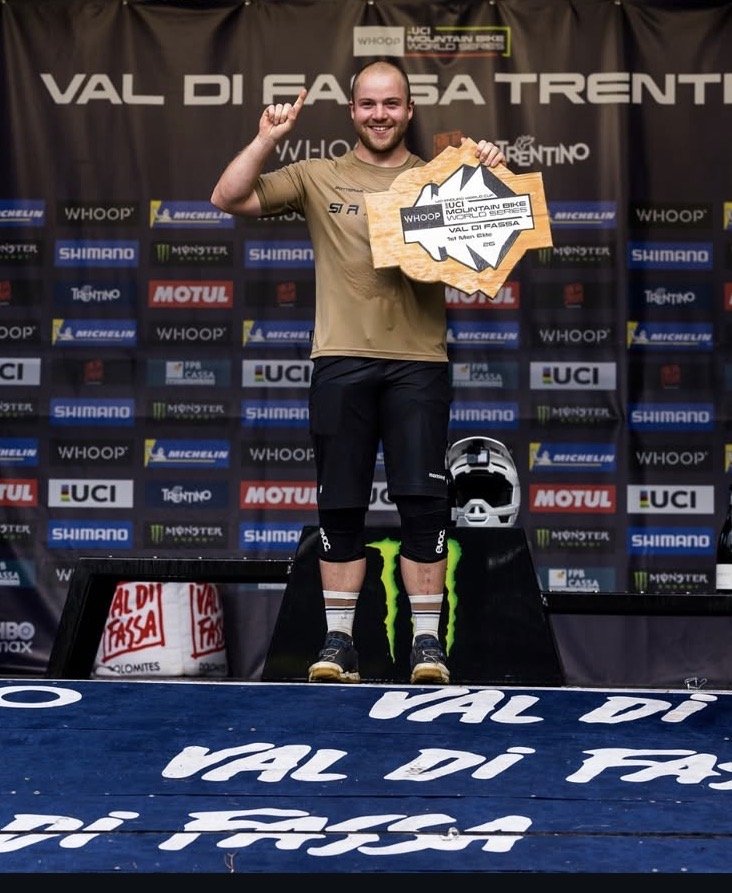
It's the question every athlete, every parent of a junior racer, and half the enduro community asks in one form or another. The honest answer is that it's never one thing. It's fitness and skill and equipment and mindset, all built on top of each other for months, sometimes years, before a single stage time ever gets posted.
We asked Tristan, who won a World Cup this season, what it actually took.
In Tristan's own words
"I think in order to win a World Cup you need to work damn hard. I definitely had points in the off season where it broke me and I did not want to train, I did not want to ride my bike. But I think it's having that discipline as an athlete that makes the difference.
I'm a huge fan of getting the bike set up correctly, I spend a ton of time ensuring that my bike is dialled, and then I feel good on it, because if the bike feels good, I know that I can push where I need to.
It's definitely hard on the mind when you don't have the results that you want and you're building towards something, and sometimes if you get setbacks it makes it hard to keep moving forward. But I guess that's what the difference is."
— Tristan
The engine is built in December, not June
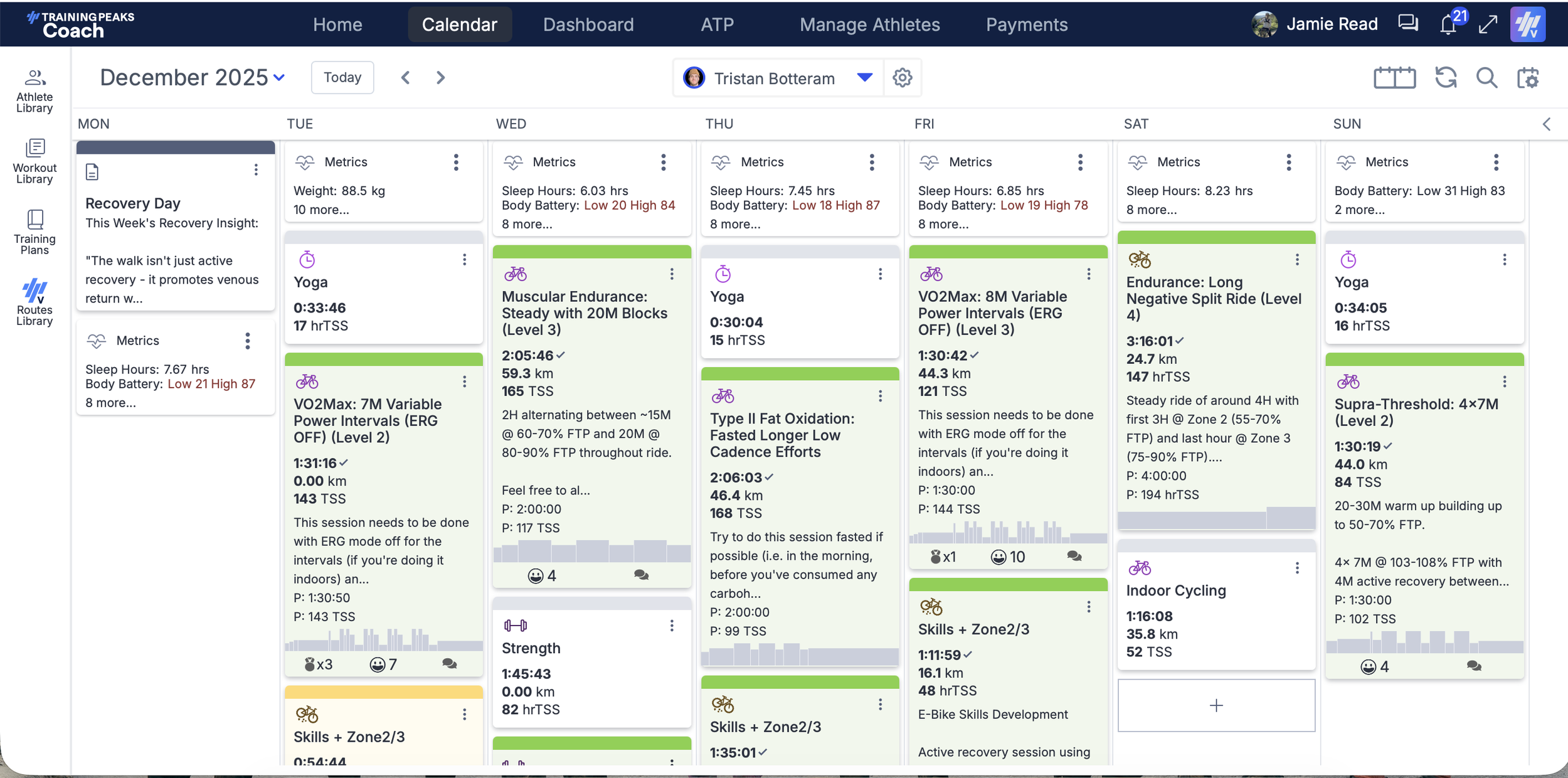
Nobody sees the off season. There's no result, no leaderboard, no one watching. It's roughly 20 hours a week through the winter months, when it's wet, cold and miserable, training in the dark before work and training in the dark after it. That's where the engine that carries an athlete through a World Cup season actually gets built. By the time a race number goes on, that work is months old and largely invisible to everyone except the athlete who did it.
Discipline is the training
Here's the part that gets missed. Those long, grim winter blocks aren't just building fitness. They're building the athlete's capacity to do something when they don't want to do it. That's discipline, and it's arguably the single most important trait we build over winter, more than any single physiological number. An athlete who has trained through a January when every session felt pointless has proven something to themselves that no amount of talk can replace. That's where mental robustness actually comes from: not from a mindset session, but from months of doing the unglamorous work anyway.
Belief has to be earned, not spoken
Positive self talk has its place, but it cannot substitute for genuine belief. An athlete has to fundamentally believe, at a foundational level, that they are capable of winning. That belief isn't built by saying the right things to yourself on the start line. It's built the same way discipline is, through evidence: through the winter sessions completed, the skills drilled, the results banked along the way. Belief is a conclusion an athlete reaches about themselves, not a line they repeat. Building that belief system is one of the most important jobs in coaching, and it's not separate from the training programme, it's built inside it.
Rider or athlete? You need to be both
There's a real distinction between a good rider and a good athlete, and it's easy to miss. You can have brilliant riders who are poor athletes: undisciplined, inconsistent, unable to manage themselves across a season. You can have excellent athletes who are, in truth, only average on a bike. To win a World Cup, you have to be both at once: skilled enough to ride at the front of the fastest field in the world, and disciplined enough as an athlete to actually arrive at the start line able to use that skill.
In Winni's own words
"When I won in Leogang, I definitely didn't feel like I was riding my best. But maybe there's something in that, maybe there's something in not feeling like you're riding your best but you actually are.
I feel like we should all be riding our bikes a lot more if we want to get good at racing. I ride my bike all the time, I'm never really off it, and I think that is what helps me.
It's definitely hard and frustrating, especially if you have a bad off season when you get sick and ill, it really makes you question yourself. But I think you just have to keep pushing through."
— Winni
Skill, built over years
None of this replaces raw riding ability. These are some of the most technically gifted athletes in the world, and that talent is the product of years, not weeks, of accumulated riding. It sits alongside everything above rather than instead of it.
The details: bike setup
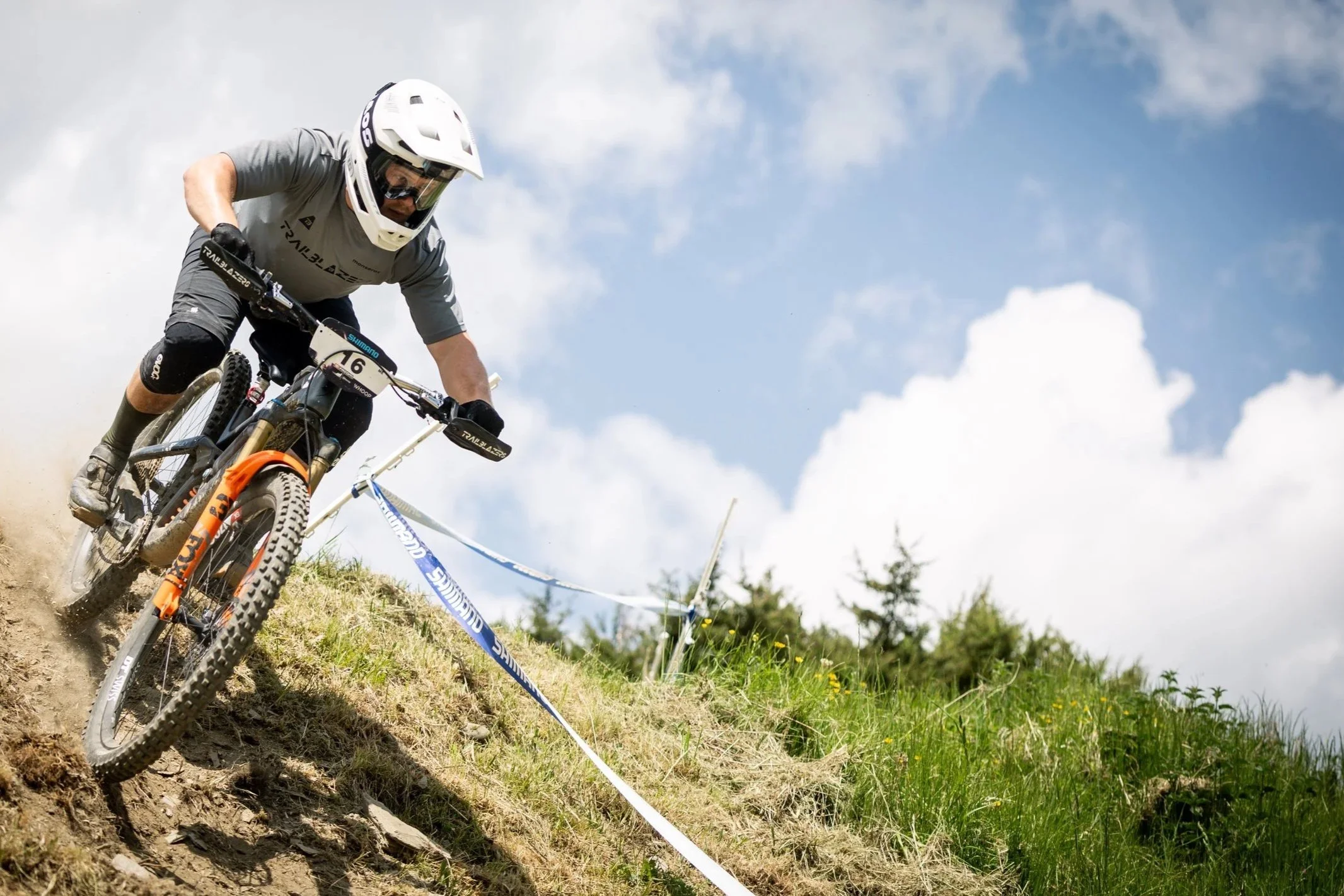
Winning also comes down to the bike itself, and not just suspension setup. Cockpit setup, tyre selection, wheel selection, stack height, bar roll, lever position, whether you run inserts or not: every one of these small decisions plays a genuine part on race day. None of them wins a race on its own, but get enough of them wrong and they'll cost one.
Race week: the boring stuff wins races
A World Cup is won or lost partly in the week before it. Good sleep, a proper recovery plan, and the discipline to actually stick to it, so the athlete can perform when it matters rather than arriving depleted. Practice is about taking in as much useful information as possible, working on lines, and then committing to the lines chosen rather than second guessing them mid stage. You can only hold so much in your head on race day; overthinking line choice late in practice tends to cost more than it saves.
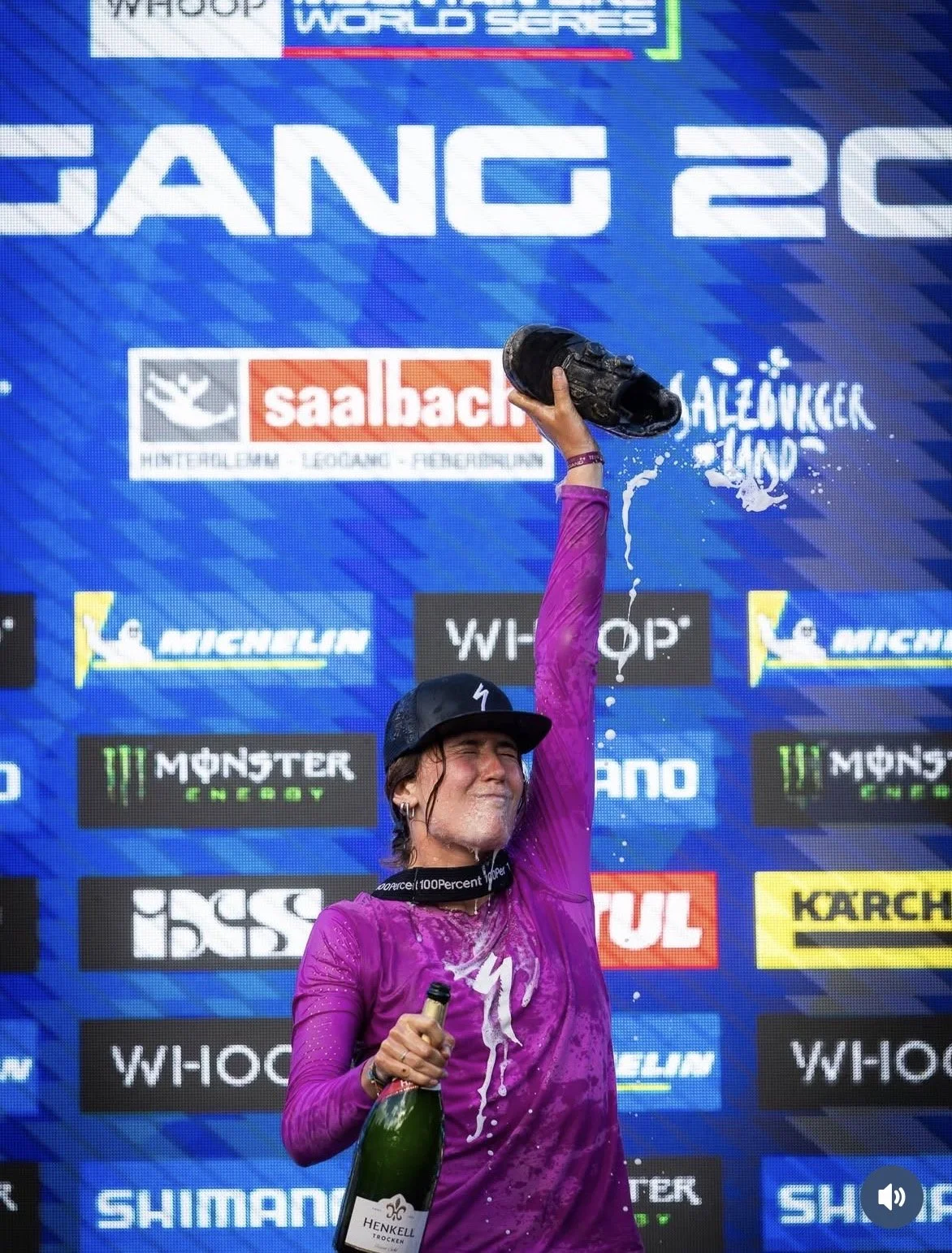
Winni Elite Female rider
It all has to link together
None of this works in isolation, and none of it happens by luck. Winning a World Cup is what happens when nutrition, mindset, fitness and skill are all worked on together, consistently, by someone willing to do it. There's no shortcut through any single piece of it. That's the whole answer, really: it takes all of it, at once, for a long time.
